
| Layer / Component | Role / What It Handles |
|---|---|
| AAA / Policy / Charging (PCRF/HSS/OCS / RADIUS / DHCP / SIP-auth) |
Real-time subscriber control, authentication, policy, quota, billing triggers |
| BSS / OSS Core (WISPGate API, UI, Mediation, Rating, Billing) |
Business logic: user management, billing, reporting, integrations, DB |
| Data-Plane (User Traffic) (EPC, BNG, BRAS, UPF, NAT, routing) |
Not managed by WISPGate, but must remain unaffected if control-plane fails |
| Supporting Services (Cache, Queue, DB, Logs) |
State, sessions, queues, data consistency, CDR persistence |
Our HA design ensures that failure in one node doesn't impact subscriber control, billing, or service availability.
| # | Model | Best For |
|---|---|---|
| 1 | Vertical Scale (Single Large Server) | Small / low-criticality deployments |
| 2 | Single-Site Active/Passive (N+1) | Medium-size clients (~100–150k subs) |
| 3 | Single-Site Active/Active (Scale-Out) | Large clients (100k–500k+ subs) |
| 4 | Dual-Site Active/Passive (DR) | National operators needing DR/BC plans |
| 5 | Dual-Site Active/Active (Geo) | Carrier-scale multi-regional deployments |
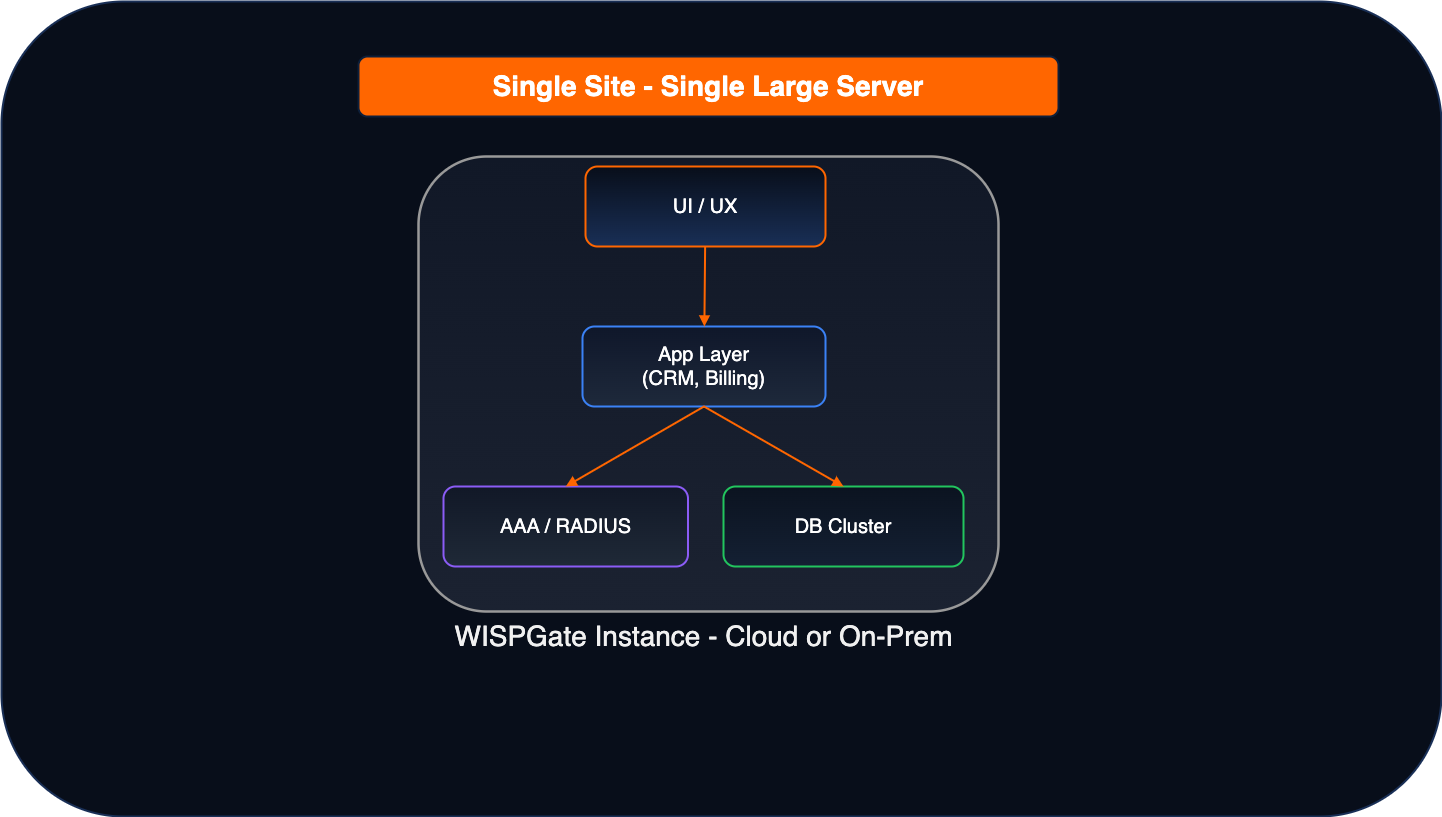
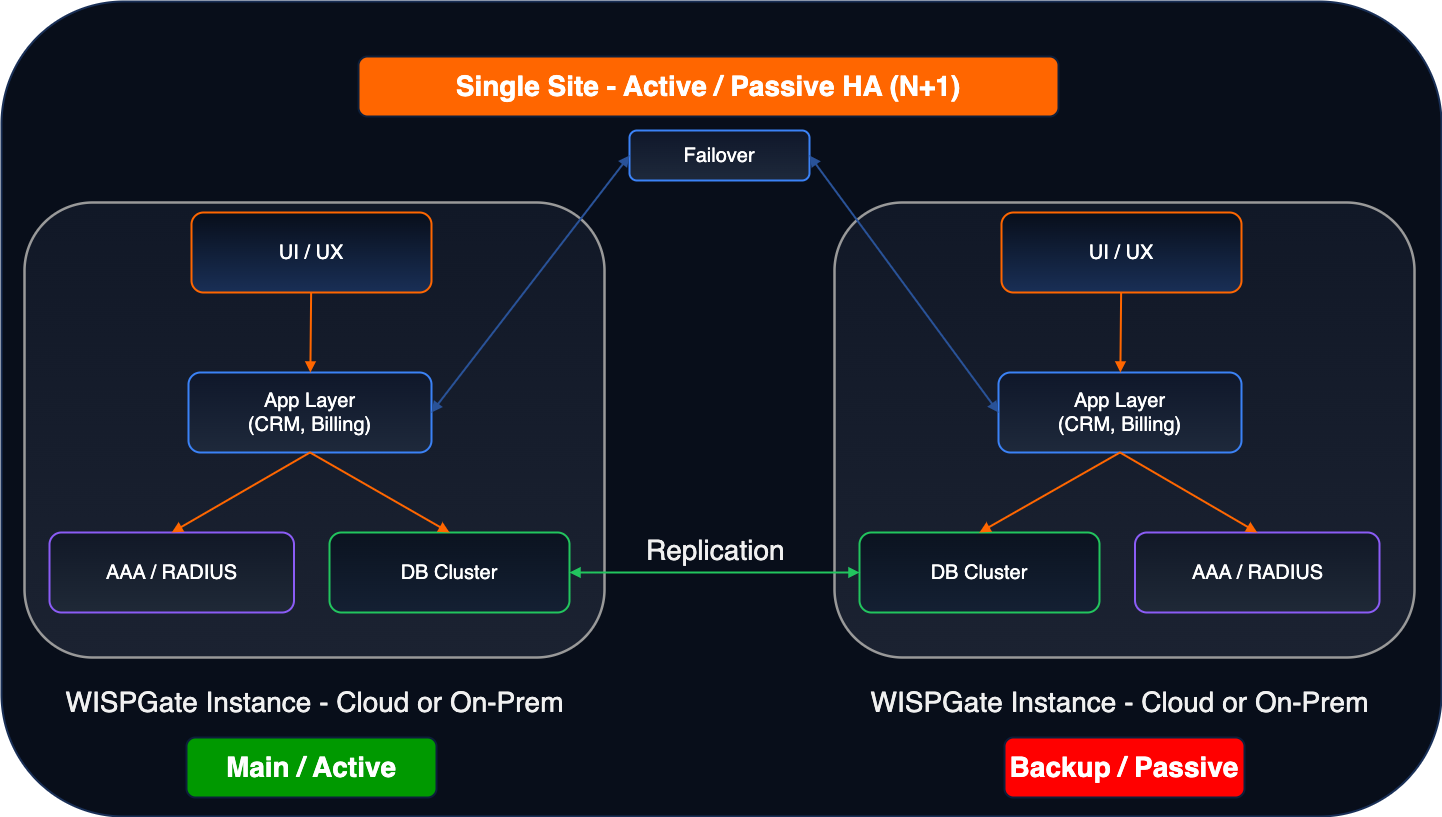
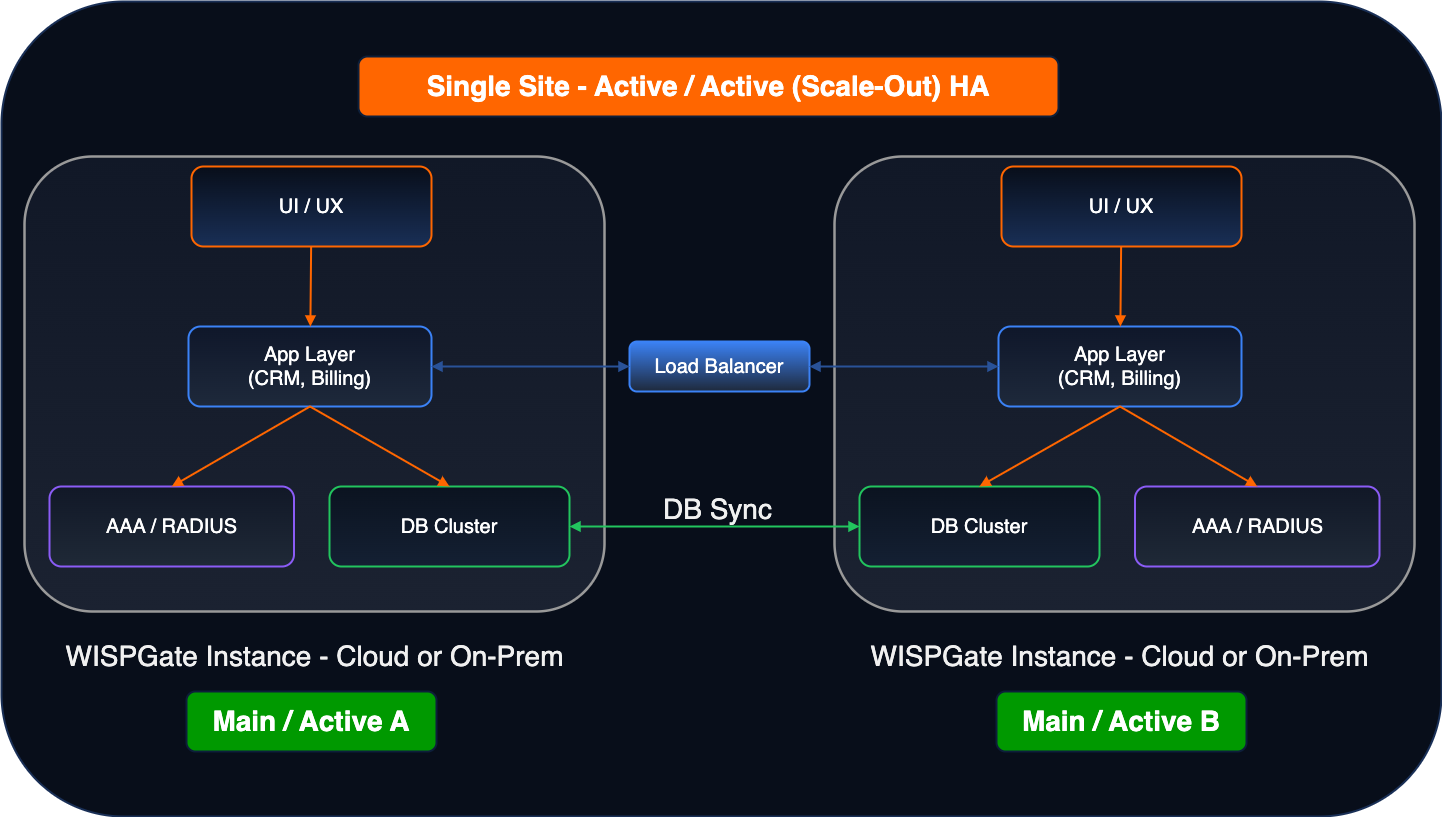
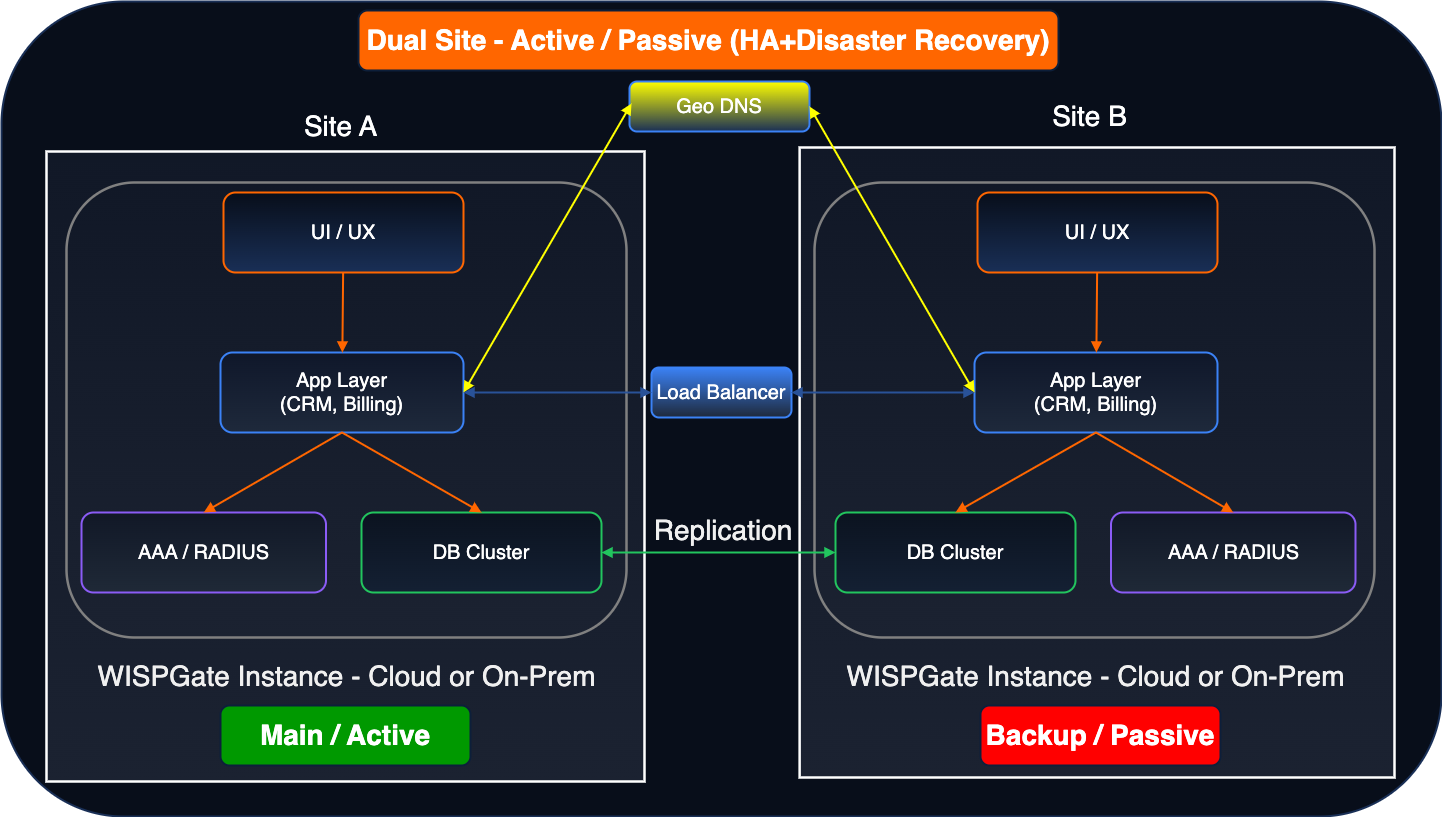
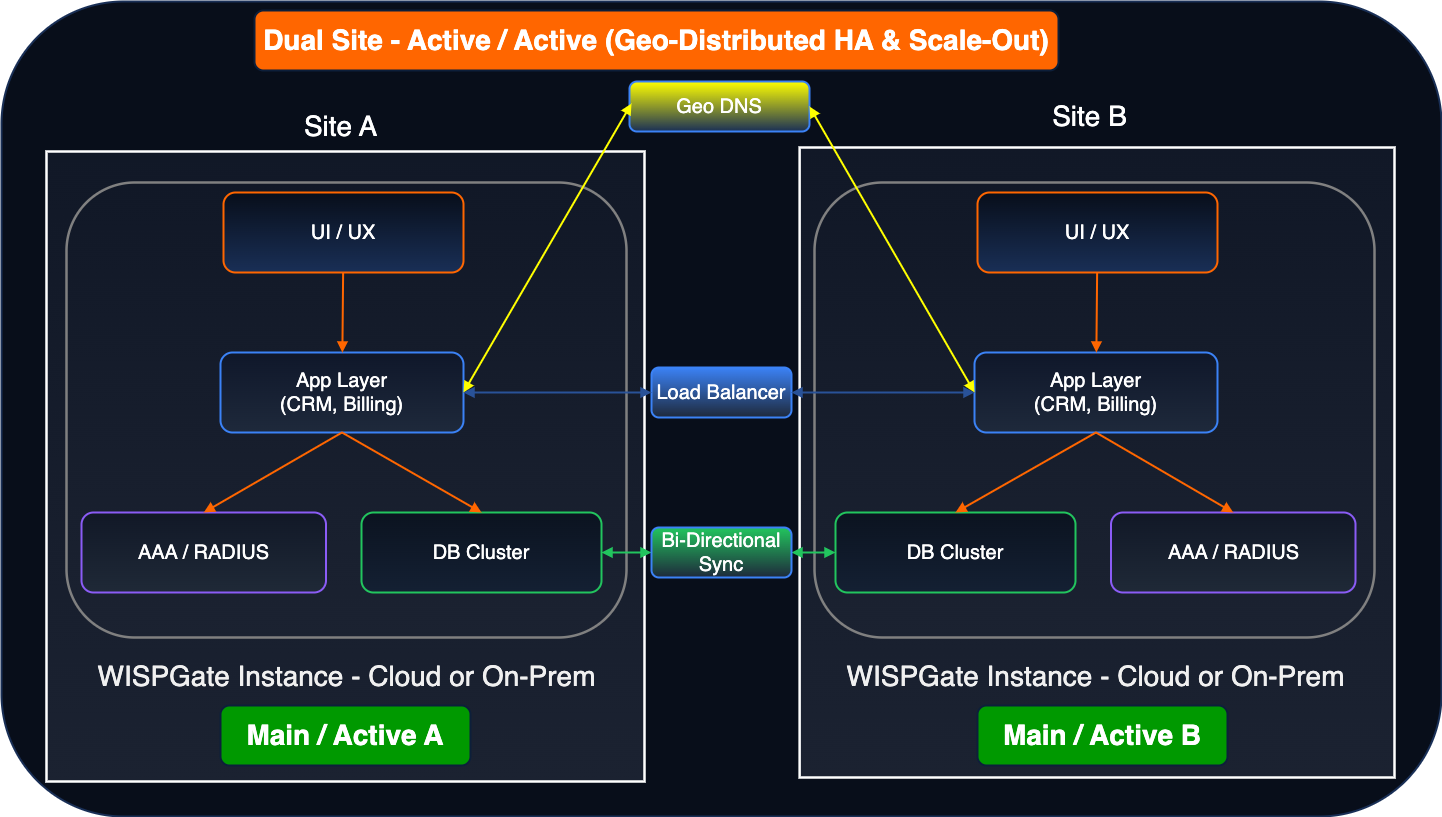
Key points:
Minimum sane design (short-term LTE HA):
Medium-term (proper LTE HA):
Key points:
Minimum HA
Extended HA
For IPTV and VoIP, the HA pattern is mostly:
Signalling / Control:
Billing / CDR Rating:
In terms of HA architecture, they fall under the same BSS/AAA HA stack you design for LTE and fixed access. You don't want a separate bespoke HA story per service; you want a unified “Charging & AAA Cluster” architecture.
Recap:
Your request has been submitted successfully.